The Perils of Perfectionism
Being perfect sounds like a pretty great goal, right? Perfect blood sugars, perfect A1C. That would mean no anxiety, no stress, no problems. Right?
The problem with perfectionism in diabetes is not that we are striving for excellent blood sugars. The problem is when we hold ourselves to unrealistic and ultimately unattainable results, and then when it fails, we blame ourselves.
This causes a cascade of thoughts and emotions that propels us in two directions: we can try harder at the same goal, and ultimately perpetuate the cycle when it continues to not work. Or it can cause us to give up.
In this week’s bonus newsletter for paid subscribers, we are going to look at:
what perfectionism is and why it manifests
how it can cause problems for people with diabetes
what to strive for instead
1. What is perfectionism and why does it manifest?
Perfectionism is not unique to diabetes management but can be seen in a multitude of life’s settings, from things like work and productivity to relationships and parenting. The underlying aim of perfectionism is not to “do things really well,” but to ultimately help us to avoid really painful emotions like shame, anxiety and inadequacy.
Brene Brown describes it as a 20-ton shield against shame in this 3 minute clip. Give it a watch:
Within the world of diabetes, management expectations have exploded and have become exponentially more rigid with the advent of technology like continuous glucose monitors. As Lauren Plunkett describes in an article on diaTribe:
“Today’s diabetes technology is remarkable, but there’s a downside. Seeing those glucose values constantly can lead to raging perfectionism. We must consider the impact of all the diabetes tech and data on mental and emotional health. The pressure we put on ourselves might be invisible, but the added clinical oversight can lead us to tie our self-worth to our numbers. Diabetes care must be paired with uplifting language that promotes self-efficacy, rather than the historically deprecating tone. Clinical terms like ‘poorly controlled’ or being labeled ‘a diabetic’ can be extremely offensive to those that live the experience every day and don’t want to be identified as a disease.”
So why does perfectionism manifest in diabetes? We believe perfectionism is the antidote to shame, blame and ridicule, as Brene says, but ultimately it is the cause of those things. And those things aren’t just coming from external factors, they are also driven by our own thoughts and judgements.
2. How does it affect diabetes management?
The hidden dangers of perfectionism has also received some attention at industry conferences, like the Diabetes + Mental Health Conference and the ADCES’s annual meeting. In their presentations, Dr. Kersti Spjut, a psychologist with T1D, and Alexis Skelley, LCSW, discuss how diabetes can manifest in “over” or “under” management behaviors.
“Over” behaviors looking over-analyzing, over-checking, over-reacting, over-stressing. Behaviors that can backfire and have unintended consequences, both for blood sugars and mental health. Perfectionism, fwiw, contributes to anxiety all on its own, and can even lead to more significant mental health issues like Generalized Anxiety, Panic Disorder and Obsessive Compulsive Disorder.
Conversely, “under” behaviors look like avoidance of diabetes management, like not checking blood sugars after eating because of the feelings of shame of not being able to “control oneself.”
In an article with Helio, Skelley say, “Perfectionism often presents itself as avoidance or procrastination of self-care and diabetes management responsibilities. Many may identify this as general lack of concern and write it off as noncompliance. It is the hesitation to engage in something when you are not confident you will be able to achieve 'perfect' outcomes, which is so often the case in diabetes.”
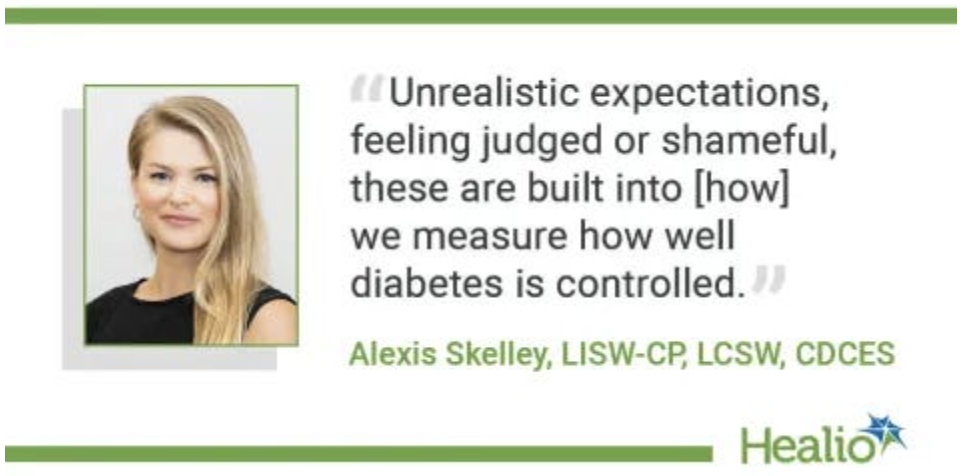
The label of noncompliance when someone actually very much cares about their diabetes management can add fuel to the shame spiral.
3. What do we strive for instead?
Critics might think this means we need to strive for “mediocre” or that we need to accept high A1Cs and rollercoaster BGs.
As Brene describes in the clip, doing well isn’t the problem. The problem is our relationship with our expectations of how things should go and our emotional response when things aren’t ideal.
First, we have to examine if our expectations are realistic, and those expectations can change depending on the situation. Only we can truly decide if something is realistic, because realism is subjective. What might feel like striving for excellence for you might feel completely unattainable and demoralizing for me, and vice versa.
This is also one pitfall to comparing ourselves to others in social media. While it can seem like a way to feel more inspired and motivated (and it can do that), it can also set up unrealistic expectations if we see someone with an entirely different lifestyle, privilege, resources and skills achieving something that we have a difficult time with.
Our healthcare team can give us a medical perspective of how to set expectations that will give us the best results in terms of health outcomes. Diabetes educators and health coaches, however, can often better understand our own personal needs and limitations and set more realistic, achievable goals and benchmarks for growth.
Second, when perceived negative events do happen, are we striving for self-compassion? Self-compassion focuses on empathizing with the human condition. Research shows that self-compassion decreases depression symptoms, which then allow self-care behaviors to flourish. In an article with Reuters, lead researcher Dr. Anna Friis, is quoted:
“Self-compassion-based treatments are founded on the notion that our tendency to be harshly self-critical or judgmental when we feel we have ‘failed’ or done something wrong makes our stress and distress worse,” said Friss, a psychologist at the University of Auckland in New Zealand.
“This is important because many diabetes patients suffer from depression and distress and we know that these mood problems make trying to achieve healthy blood glucose control even more difficult,” Friis said. “This is why there is an ongoing search for ways to help patients manage their mood, because we know this has important effects on their physical health.”
The antidotes to perfectionism are essentially healthy striving for excellence — aiming to do well and continue to grow and improve, but not at the expense of your own self-identity — and self-compassion, which is understanding that mistakes and failures are not a reflection of your worth.